Plato
Life After LifePlato is presented as a philosophical predecessor whose myths and arguments give the book ways to frame questions raised by near-death experiences without treating ancient thought as a substitute for contemporary evidence. His account of Er links a return from the dead with the loss of knowledge; his argument against suicide casts earthly life as an entrusted duty; and the Allegory of the Cave depicts the difficulty, and possible danger, of returning from a changed vision of reality. Together, these references make Plato a recurring point of comparison for the book’s accounts of death, learning, and return.
Er, return, and forgetting
The book connects reports of a seemingly complete but fleeting knowledge during near-death experiences with Plato’s story of Er. In those reports, people describe a glimpse of a realm in which knowledge of past, present, and future seems to coexist, or a moment of enlightenment in which they seem to know everything. They also agree that this state is ultimately inexpressible and that its apparent omniscience does not survive their return. Rather than discouraging further study, the experience can encourage it. The book’s author proposes that the contrast between expansive knowledge during the encounter and ordinary limits afterward may suggest some process that prevents the knowledge from carrying over into physical life.
Plato’s Er offers an ancient narrative parallel. Er is a warrior believed dead who returns to life on his funeral pyre after seeing things in the afterlife. Before his return, he sees souls preparing to be born. They travel to the Plain of Oblivion and camp beside the River of Forgetfulness, whose water cannot be kept in a vessel. Each soul must drink a measure; those who drink too much forget everything. Er, by contrast, is not permitted to drink. He cannot explain how he returns to his body, but suddenly recovers his sight and finds himself on the pyre at dawn. The story thus joins return with a boundary around what can be remembered: the returning person may bring a report, but the transition into life is entangled with forgetting.
The book identifies this as a thematic resemblance, not as proof that the modern reports and Plato’s story describe the same event. In each, some form of knowledge belongs to an eternal or otherworldly state, while the return to embodied life involves a limit on what can be retained. The comparison gives the reported loss of knowledge a long philosophical history and makes the act of returning, rather than revelation alone, central to the question.
Life as an entrusted duty
Plato also appears in the book’s discussion of arguments against suicide. The author traces a longstanding theological and philosophical position that life is assigned or given by God, and that an individual is not entitled to end it at will. In the Phaedo, Plato is described as invoking the idea that people are placed on earth at a kind of post: they belong to God’s care and should not run away from the station entrusted to them. The comparison places this ancient argument alongside reports from people who survived suicide attempts and afterward said they would not try again. Their accounts describe regret at the attempt and relief that it failed; one man’s reasoning was that earthly life is short, much remains to be done, and death leads into eternity.
The book does not collapse these personal responses into Plato’s argument. Instead, it sets them beside a related structure of thought: life is not simply an individual possession to discard, but a period with obligations and purposes. In this framing, the return to life after an unsuccessful attempt can carry a changed understanding of the time still available. Plato’s relevance is therefore ethical as well as metaphysical: his image of an assigned post supplies an ancient formulation for the claim that human life is held in trust.
The Allegory of the Cave
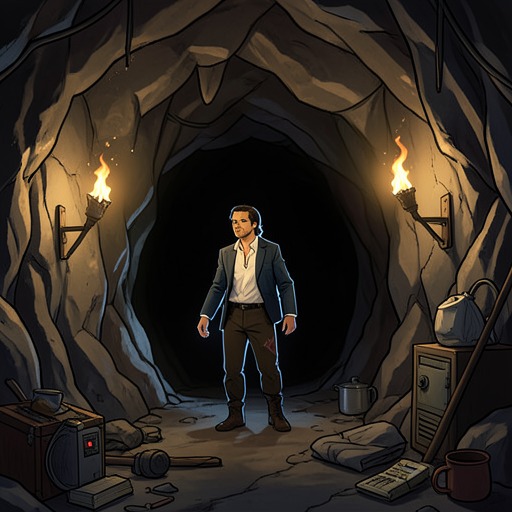
In the epilogue, Plato’s Allegory of the Cave becomes the book’s closing image. The book identifies it as an allegory in Book VII of the Republic, presented as a dialogue between Plato’s teacher, Socrates, and Glaucon. Its prisoners have been shackled from childhood in an underground cavern. Unable to turn their heads, they face a wall; behind them burns a fire, and between the fire and the prisoners runs a raised road with a low wall, above which objects are carried like puppets in a show. The prisoners’ restricted position defines the narrow field of what they can see.
The passage then considers the reception of someone who has journeyed upward and returned. While the returned person’s eyes are still adjusting to darkness, the prisoners may laugh at his impaired sight and dismiss the ascent as worthless. The allegory sharpens into a warning: if the prisoners could seize and kill the person attempting to free them and lead them upward, they would do so. The image is not merely about the difficulty of seeing differently; it also makes the attempt to change other people’s understanding potentially dangerous.
Plato’s cave frames the book’s concern with experiences that seem to disclose a reality beyond ordinary perception, and with the challenge of communicating such experiences afterward. The returning person does not automatically possess a persuasive account or an audience prepared to accept it. The cave’s prisoners evaluate what they can see from within their constraints, while the returned figure faces ridicule and, in the allegory’s starkest possibility, violence. The book ends by letting this image stand without further comment, making Plato’s account a final lens on the distance between an experience of expanded vision and the world to which its witness returns.
A continuing philosophical point of comparison
Across these references, Plato serves less as a biographical subject than as a source of connected conceptual models. Er supplies a narrative of return and forgetting; the Phaedo contributes an argument about life as an entrusted station; and the Allegory of the Cave dramatizes the limits imposed by accustomed perception and the risks of challenging them. The book uses these materials to place its modern reports beside older questions rather than to claim that the reports settle them.
That distinction matters to the book’s broader method. Its accounts are presented as testimony to be studied, while Plato’s myths and arguments offer analogies through which their implications can be considered. The comparison allows the book to connect the temporary loss of extraordinary knowledge, the obligation to continue living, and the difficulty of communicating an altered vision, without treating any one of those connections as a scientific demonstration of life after death.